
Botox In Nevada: What Do You Need To Know Before Your Treatment?
Botox has become one of the most requested treatments in Nevada’s medspas and dermatology clinics, but not every provider offering it is legally allowed to inject it. Before booking, know who can legally treat you, what it actually costs, and how Botox compares to Dysport, Xeomin, and similarly named products that aren’t the same thing.
Table of Contents
Request a Wholesale Quote in Nevada
Are you buying for your clinic or aesthetic practice? Contact us today to find out more about our competitive bulk pricing on Botox, dermal fillers, skin boosters, mesotherapy products, needles and cannulas.
Shipping & Delivery
We make ordering professional aesthetic products simple and reliable:
- Fast processing and secure packaging for every order.
- Temperature-sensitive products are handled with appropriate care where required.
- Tracking information is provided once your order is dispatched.
- Bulk and wholesale shipping options are available for larger orders.
- Contact our team for international shipping availability and delivery estimates.
-
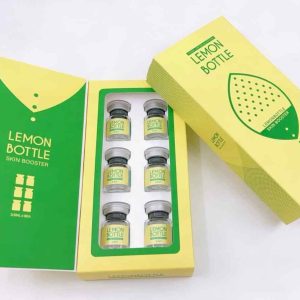
Skin Booster
Lemon Bottle Skin Booster 3.5ml x 6 Vials Overview
$190.00Original price was: $190.00.$170.00Current price is: $170.00. Add to cart -
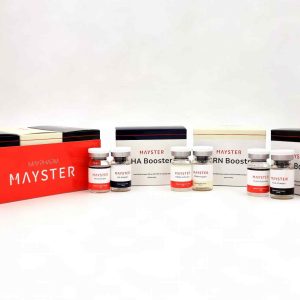
Skin Booster
Mayster PDRN Skin Booster Set for Professional Use
$244.00Original price was: $244.00.$230.00Current price is: $230.00. Add to cart -
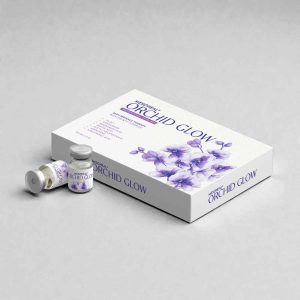
Skin Booster
Mesoheal Orchid Glow 10x5ml Aesthetic Skin Booster
$250.00Original price was: $250.00.$170.00Current price is: $170.00. Add to cart -
Skin Booster
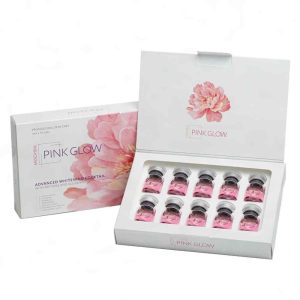
MESOHEAL® Pink Glow Skin Booster 10x5ml Vials Case
$345.00Original price was: $345.00.$200.00Current price is: $200.00. Add to cart
Key Takeaways
- Nevada law limits Botox injections to physicians, physician assistants, registered nurses, advanced practice registered nurses, and specially trained dentists or podiatrists, and only inside a medical facility or licensed office.
- Results typically last three to four months regardless of whether you choose Botox, Dysport, or Xeomin; none of the three is universally “better.”
- Nabota and Botulax are not the names under which these products are sold legally in the United States; their FDA-approved U.S. identities are Jeuveau and Letybo.
- Per-unit pricing, not the advertised session price, is the number that actually tells you what you’re paying.
- The CDC has documented real harm from counterfeit and unlicensed botulinum toxin injections, so verifying a provider’s license is a basic safety step, not optional caution.
How can you find safe and trusted Botox treatment in Nevada?
There is a growing supply of medspas, dermatology practices and cosmetic surgery centres offering Botox in Las Vegas, Reno and Henderson, and the range of experience among them varies widely. This guide explains what Nevada law requires of anyone administering Botox, what the treatment involves, what it can and can’t do, what a session and recovery are like, how results compare across brands and how much it costs. It also covers licensed alternatives to the product names Nabota and Botulax, which often come up in Nevada searches but are not sold under those names in the US market.
Who is legally permitted to administer Botox in Nevada?
Botox is a prescription-only medicine, and in Nevada, injecting it is considered a medical procedure rather than a beauty treatment. According to Nevada Revised Statutes 629.086, only physicians, physician assistants, registered nurses and advanced practice registered nurses may inject neuromodulators such as Botox.
Dentists and podiatric physicians who have completed the required training from their board may also perform the injection. Estheticians and other unlicensed staff cannot legally perform the injection, regardless of how a business markets the service. The law also stipulates that injections must be performed in a medical facility or an authorised professional’s office rather than in a private home, hotel room or at a pop-up event.
Providers working outside this scope risk disciplinary action against their licence, and patients injected by unauthorised persons have little recourse if something goes wrong.
Are Botox parties legal in Nevada?
No. A ‘Botox party’, where a group of people receive injections in someone’s home, a hotel suite or a rented event space, does not meet Nevada’s requirement for injections to be carried out in a medical facility or licensed office. Even if the person administering the injections holds a valid licence, doing so at an off-site social gathering violates the location requirement. These events also tend to skip the individualised health screening that a proper consultation requires, which increases the risk of an adverse reaction going unrecognised until it becomes serious.
What exactly is Botox, and how is it used?
Botox is the brand name for onabotulinumtoxinA, a purified form of botulinum toxin type A which temporarily blocks the nerve signals that tell a targeted muscle to contract. Manufactured by Allergan/AbbVie, it was first approved by the US Food and Drug Administration (FDA) in 1989 for treating eye muscle disorders, with approval for cosmetic use following in 2002. The term ‘Botox’ is often used generically, but it is one specific branded product among several FDA-approved botulinum toxin type A treatments, including Dysport, Xeomin and Jeuveau. Each of these has its own formulation and approved uses.
What other conditions can Botox treat besides wrinkles?
In a cosmetic context, Botox softens dynamic wrinkles caused by repeated muscle movement, most commonly on the forehead, between the eyebrows, and around the eyes. Medically, Botox is FDA-approved for the prevention of chronic migraines, severe underarm sweating (hyperhidrosis), cervical dystonia and certain bladder conditions.
It is also frequently used off-label to treat jaw tension associated with TMJ disorder and to reduce the masseter muscle. During a consultation, it is often revealed that concerns relating to wrinkles and clenching-related jaw pain can both be addressed with the same provider as distinct goals.
Who is a good candidate for Botox treatment?
Most healthy adults aged 18 to 65 with visible dynamic wrinkles are reasonable candidates, though the right age to start varies depending on individual skin and muscle activity rather than being a fixed number. Pregnancy and breastfeeding are contraindications, as are certain neuromuscular conditions such as myasthenia gravis.
A known allergy to any ingredient in the botulinum toxin also rules it out. Patients taking blood thinners should disclose this during the consultation, since it affects the risk of bruising rather than eligibility itself. A consultation should include a thorough review of your medical history, not just a quick look at your face, since a provider cannot rule out contraindications without asking.
What happens during a Botox treatment session?
A typical visit begins with a consultation. The practitioner examines your facial muscles at rest and in motion, asks about your goals and health history, and marks the injection points according to your unique muscle pattern rather than using a generic template. The injections are administered with a very fine needle and take about 10 to 15 minutes in total.
Most patients describe a quick pinch rather than significant pain, and numbing cream is rarely necessary. You will usually be asked to avoid lying down or rubbing the treated area for a few hours afterwards to prevent the product from migrating.
What should you expect during your recovery after Botox?
Mild swelling, redness or small bruising at the injection site is common and usually resolves within a few days. Providers generally recommend avoiding strenuous exercise, alcohol and lying flat for at least four hours. They also recommend skipping facials and extensive sun exposure for 24 to 48 hours. Visible results build gradually, typically starting around days three to five, reaching their full effect within one to two weeks. As there is no incision or anaesthesia involved, downtime is minimal compared to surgical procedures, and most patients can return to normal activities on the same day.
How long do Botox results typically last?
Most patients see results that last three to four months, though some report results that last up to six months, while others notice fading closer to the three-month mark. The speed at which results fade is influenced by factors such as faster metabolism, higher muscle activity in the treated area and the number of units used. Due to this variation, providers typically arrange a follow-up appointment at around the three-month point rather than committing to a fixed annual schedule.
Are dermal fillers a good alternative for restoring facial volume?
Dermal fillers address different concerns to Botox and are not interchangeable with it. While Botox relaxes the muscles that cause movement-related wrinkles, dermal fillers, which are typically made of hyaluronic acid, restore lost volume in areas such as the cheeks, under-eye hollows and lips. Those dealing with static volume loss due to ageing often benefit more from fillers than from Botox, and many practitioners combine both treatments when a patient has both concerns.
What other injectable treatments are available in Nevada?
Providers in Nevada commonly offer several categories of injectable treatment beyond Botox, including other FDA-approved neuromodulators and dermal fillers designed to restore volume. Determining which treatment is right for you begins with identifying the specific concern, since movement-related wrinkles, volume loss and jaw tension each point towards a different product category. Many clinics offer combination packages, pairing a neuromodulator with filler for more comprehensive results.
Are Nabota and Botulax the same as Botox in Nevada?
You may see Nabota or Botulax mentioned in Botox-alternative searches, but neither is sold under those names in the United States. Nabota is manufactured in South Korea by Daewoong Pharmaceutical; its FDA-approved U.S. version is marketed under the name Jeuveau. Botulax is manufactured in South Korea by Hugel; its FDA-approved U.S. version is marketed as Letybo, approved in February 2024. A vial physically labeled “Nabota” or “Botulax” is not the FDA-cleared product legally available through licensed U.S. providers, and the CDC has documented real harm connected to unapproved and counterfeit botulinum toxin. If a Jeuveau- or Letybo-style result interests you, ask your Nevada provider by the FDA-approved name and confirm the product’s source directly.
How does Botox compare to Dysport and other alternatives?
Dysport (abobotulinumtoxinA) spreads further than Botox from the injection point, which many providers consider useful for larger areas, such as the whole of the forehead. The reported onset of action is also faster, often within two to three days as opposed to closer to a week for Botox, though individual responses vary and there is no clinical proof that one works definitively faster than the other.
Dysport and Botox use different, non-interchangeable unit systems, so a lower per-unit price for Dysport doesn’t automatically mean cheaper treatment, as more units are typically needed for a comparable result.
How does Botox compare to Xeomin for patients in Nevada?
Xeomin (incobotulinumtoxinA) is manufactured without the accessory proteins found in Botox and Dysport. This is why it is sometimes referred to as a ‘naked’ formulation. Some practitioners suggest that this reduces the likelihood of the body building resistance to the toxin with repeated treatments, which is particularly beneficial for patients who have experienced reduced effectiveness with other products.
Xeomin dosing is generally closer to Botox’s than Dysport’s, making it easier to compare quotes. A typical Xeomin session is essentially identical to a Botox session in terms of visit length and aftercare.
How much does Botox cost in cities across Nevada?
Nationally, the price per unit of Botox typically ranges from $10 to $20, with premium urban providers charging more and smaller markets charging less. A full session usually costs between $300 and $600. Pricing in Nevada generally tracks national mid-market rates, though exact costs vary by city, overheads, and injector credentials. For example, a Las Vegas medspa and a smaller Reno practice may quote differently for the same unit count.
Rather than comparing “starting at” prices advertised by different providers, ask each one for their per-unit rate and the expected number of units required for your treatment. This will give you a more accurate idea of the total cost. If you are ready to proceed, contact a licensed Nevada provider for a personalised consultation and quote.
Where can you find trusted Botox providers in Nevada?
The quality of Nevada’s Botox providers, which range from dermatology practices and cosmetic surgery centres to independent medspas, varies greatly within each category and between them. Before booking an appointment, verify the specific injector’s licence type and confirm that they have completed any Nevada-required training.
Remember that a clinic’s overall reputation does not guarantee that every injector meets the same standard. Reviews that mention the provider by name tend to be more useful than a clinic’s overall star rating. Many Nevada clinics also offer additional services such as fillers, peels or laser treatments, which are worth asking about if you are planning to receive ongoing care.
Frequently Asked Questions About Botox In Nevada
Who is legally permitted to administer Botox in Nevada?
According to Nevada Revised Statutes 629.086, only physicians, physician assistants, registered nurses, advanced practice registered nurses, and specially trained dentists or podiatric physicians may legally inject Botox in Nevada, and only inside a medical facility or licensed office.
How long do Botox results typically last?
Most patients see results that last three to four months. The duration depends on individual metabolism, muscle activity in the treated area and the number of units used, so your results may last for a shorter or longer period of time than average.